Preservation
Storing an exotic car in a tropical climate
Humidity, heat, and long periods of stillness are a difficult combination. What proper layup looks like when the car will not be driven for months.

Owners often assume that a car left standing is a car that cannot deteriorate. In a hot, humid climate the opposite is closer to the truth. Movement circulates fluids, dries out moisture, exercises seals, and keeps the battery charged. Stillness does none of those things, and in the tropics it adds a variable that colder climates barely have to consider: air that carries a great deal of water for most of the year.
We handle layup as a defined process with a beginning, a middle, and a return, because the mistakes that hurt a stored vehicle are almost all mistakes of preparation rather than storage itself.
Before the car goes still
The single most important principle is that a car should enter storage clean, dry, and mechanically sound. Anything left on the vehicle has months to work on it undisturbed.
- Fluids are changed rather than topped up, because used oil carries acidic by-products and moisture that will sit against internal surfaces for the whole period.
- The fuel tank is filled to reduce the air volume available to condense moisture, and a stabiliser is added where the layup will run beyond a few months.
- The car is fully decontaminated and dried, including door shuts, sills, and the underbody. Organic residue such as bird lime or insect remains will etch a clear coat given time and warmth.
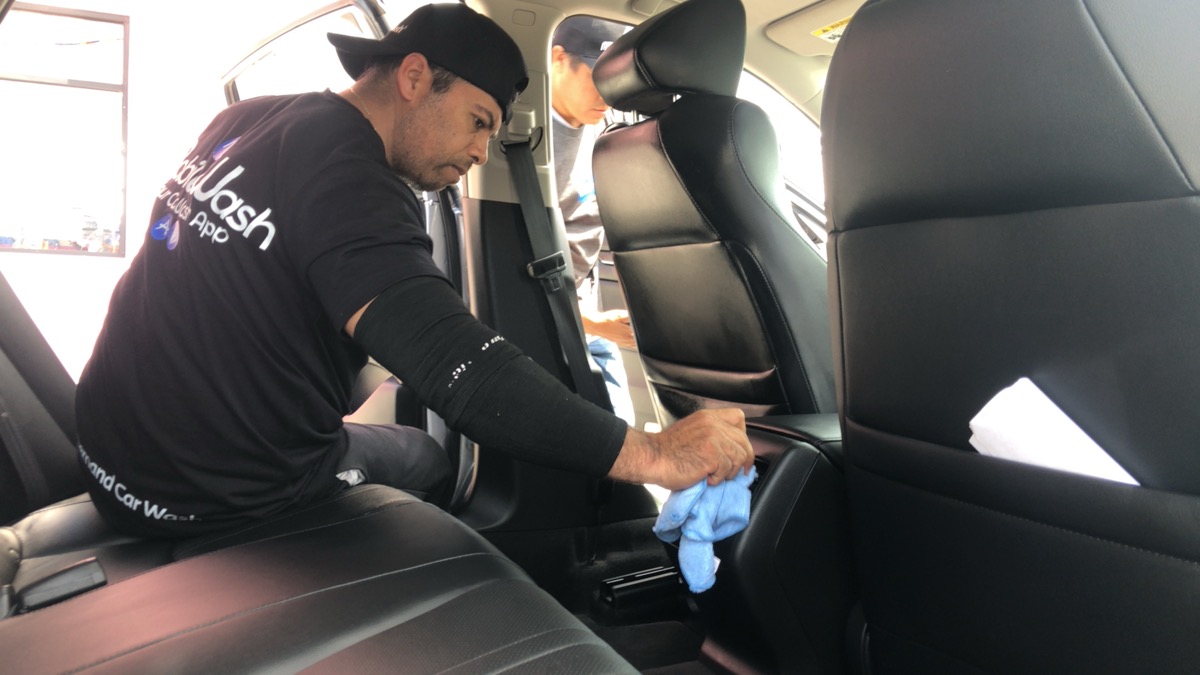
- The cabin is deep cleaned and dried thoroughly. Any moisture trapped in carpet or underlay becomes a mould problem within weeks at tropical humidity.
- Brakes are inspected and the handbrake is left off, with the car chocked instead, so pads are not held against a disc for months.
Managing air, not just space
Storage advice written for temperate climates focuses on temperature. Here the priority is humidity, because water in the air is what drives corrosion, mould, and electrical failure.
A stored vehicle wants gentle, continuous air movement in a space that is shaded, ventilated, and not subject to large daily temperature swings. Swings are the real problem: air that warms through the afternoon and cools sharply at night deposits condensation on every cool metal surface it touches, including surfaces inside the engine and exhaust.
Where the space allows it, dehumidification does more good than air conditioning. Where it does not, we favour ventilation over sealing, because a sealed space with moisture already inside it is a worse outcome than an open one.
Tyres, battery, and the things that fail quietly
Two components account for most storage complaints, and both are entirely preventable. Tyres develop flat spots when a stationary load sits on the same contact patch for months, and the effect becomes permanent on a stiff, low-profile sidewall. Inflating above normal running pressure for the storage period helps; taking the load off the tyres entirely helps more.
Batteries fail because a modern car never truly sleeps. Alarm systems, telematics, and control modules continue to draw current, and a battery that is allowed to discharge deeply will sulphate and lose capacity permanently. A quality maintenance charger left connected is the correct answer. Disconnecting the battery is a second-best option, and on many premium vehicles it introduces its own complications with stored settings and adaptive learning.
- Rodents are a genuine risk in warm storage, and they are attracted to soy-based wiring insulation used by several manufacturers. Traps and inspection matter more than deterrent sprays.
- Wiper blades left resting on glass will bond to it and mark the screen. Lift them or place a barrier beneath.
- Fuel system seals and air conditioning seals both dry out without use, which is one of the arguments for periodic running rather than absolute stillness.
- Exhaust and intake openings should be covered against insects, then very clearly flagged so the covers are removed before the engine is started.
A well-stored car needs almost nothing on return. A badly stored one needs a service, a detail, and a set of tyres.
During and after
Long-term storage benefits from scheduled intervention rather than being left alone entirely. A monthly cycle of running the engine to full operating temperature, exercising the air conditioning, moving the car far enough to change the tyre contact patch, and checking for leaks or pests catches problems while they are still small. A short run at temperature is far better than a two-minute idle, which introduces moisture without ever removing it.
Recommissioning is its own appointment, not something to attempt on the morning you want to drive. Fluids and levels are checked, brakes are inspected for surface corrosion and bedded in deliberately, tyre pressures and condition are reassessed, and the electrical system is verified before the car goes back into use. Where the layup has run long, we treat the first drive as a road test with a technician rather than a handover.
Done properly, none of this is dramatic. It is a checklist, applied consistently, by people who have seen what happens when it is skipped. The measure of good storage is that the return is uneventful, and the car simply drives the way it did the day it was put away.